Heilongjiang, China's far north
China's northernmost province: Harbin's ice festival, the ski slopes at Yabuli and the snow town to the south.
The short answer
Heilongjiang is China's northernmost province, and January is the reason to go: the ice festival at Harbin, skiing at Yabuli, and the Snow Town south of the capital. It borders Russia along the Amur River, and much of Harbin's architecture is Tsarist-era. Expect −15°C to −25°C, and budget about £120 for boots, thermals and mittens.
- January runs −15°C to −25°C; the Ice and Snow World opens about 5 January
- Harbin to Beijing is about 5h by high-speed rail, or 2h by air
- Yabuli, China's largest ski area, is 200 km from Harbin with runs up to 1,300 m
- China Snow Town is 280 km south of Harbin; stay a night, not an afternoon
- Mohe, at 53°N, is the northernmost town in China and can reach −40°C
The city to base yourself in
Harbin is the reason to visit Heilongjiang in winter, but the province runs on: Yabuli for skiing, the far-north town of Mohe, and the snow village of Xuexiang. Harbin →
The ice city and beyond
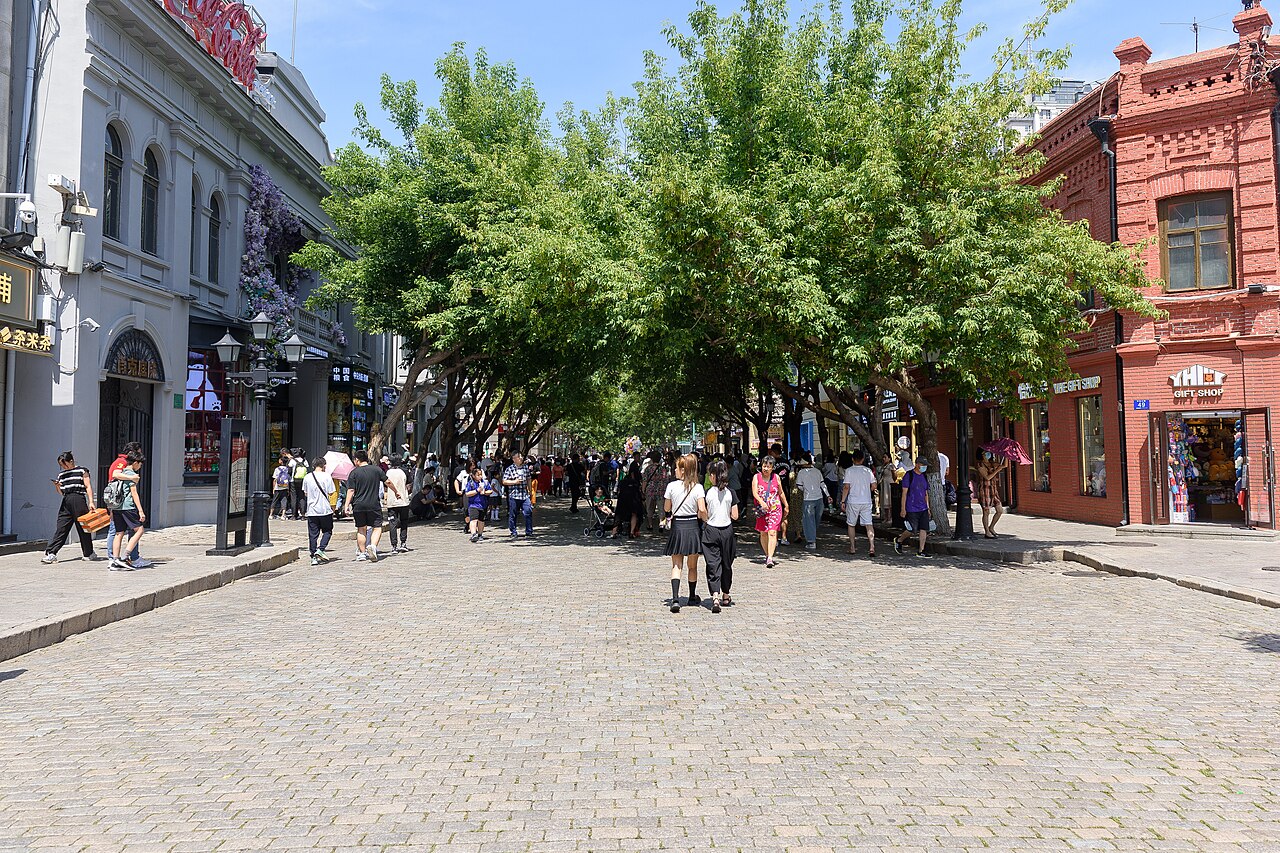
Harbin's International Ice and Snow Sculpture Festival opens around 5 January and runs to late February, when the Songhua River is thick enough to cut into blocks for the buildings. The Russian-era streets — Central Street and St Sophia Cathedral — date from the China Eastern Railway, built from 1898.
Around it, the province is the far north of China: the Amur River forms a border with Russia that runs some 3,000 km, and roughly 40 per cent of Heilongjiang is forest.
Snow, ski and the northernmost town
Two hours south of Harbin, Yabuli is China's largest ski area, with about 20 runs up to 1,300 m and a season from November to late March. China Snow Town, 280 km away, is a hillside village under two metres of snow each winter; it is small, and a night is enough.
Mohe, at 53°N, is the northernmost town in the country. In midwinter it drops to −40°C, the rivers freeze solid, and on clear nights there is a faint but genuine chance of the aurora.
When to go
January and February are for the ice and the snow, at −15°C to −25°C. July and August, at about 25°C, are the other season, green and cool — worth it if you want the forests and the rivers rather than the festival, and a good escape from the summer heat further south.
Ice and Snow World
Ice buildings at city scale, lit after dark, open from about 5 January to late February.
Central Street
Harbin's Russian-era boulevard, with St Sophia Cathedral a short walk from the river.
Yabuli
China's largest ski area, 200 km from Harbin, with runs up to 1,300 m and a long season.
China Snow Town
A hillside village under two metres of snow, 280 km south; one night is enough.
Mohe
China's northernmost town at 53°N, down to −40°C, with a faint chance of the aurora.
Wudalianchi
A UNESCO geopark of volcanic craters and five dammed lakes, north of Harbin.
Practical
| Province capital | Harbin |
|---|---|
| Main airport(s) | Harbin Taiping (HRB); Mohe (OHE) for the far north |
| Direct flights from the UK | None; connect via Beijing or Shanghai |
| High-speed rail | Harbin–Beijing 5h · Harbin–Shenyang 2h |
| Best months | January–February for the ice; July–August for green |
| Typical length of stay | 4–5 days |
| January temperature | −15°C to −25°C (5°F to −13°F) |
| Ice festival | Opens about 5 January, runs to late February |
| Borders | Russia, along the Amur River |
| Time zone | GMT+8 (7 hours ahead of the UK in summer, 8 in winter) |
Getting there from the UK
There are no direct flights from the UK to Harbin. The usual routing is one change at Beijing or Shanghai; Harbin is about 2 hours by air from Beijing and 2 hours 30 minutes from Shanghai, so the total journey is around 14 to 16 hours.
High-speed rail from Beijing to Harbin takes about 5 hours if you would rather not fly the last leg. In winter, build in a buffer: snow can delay both flights and trains in January, and airport transfers in Harbin slow to a crawl in a snowstorm.
How many days
Four days is the usual Harbin trip: two in the city for the ice festival and the old streets, a day trip to Yabuli or the Snow Town, and a day to recover. If you go north to Mohe, add two days for the travel. Heilongjiang is a long way from everything else, so most people fly in, stay put in the north-east, and fly out again rather than combining it with the rest of China.
Worth knowing if you're travelling from the UK
British passport holders can enter China visa-free for up to 30 days until 31 December 2026, so no visa is needed for this trip. Heilongjiang is on GMT+8, seven hours ahead of London in summer. The cold is the practical issue: budget about £120 for insulated boots, thermal base layers and mittens before you fly, because buying good kit in Harbin costs more and takes a day. Cards work in hotels and malls; set up Alipay or WeChat Pay for taxis and the festival ticket office, and keep your phone in an inside pocket, since it will lose charge outdoors within minutes.